Overslaan en naar de inhoud gaan
Icomos
Block
Menu

Hoofdnavigatie

  • Agenda
  • Contact opnemen
    • Contactformulier
    • Contactpersonen
  • Emerging Professionals
  • Focusthema's
    • Erfgoed en Toerisme
    • Gedeeld Cultureel Erfgoed
    • Water en Erfgoed
  • ICOMOS Lezingen
    • ICOMOS Lezingen
    • Lezingenarchief
    • Lezingencommissie
    • Toekomstige lezingen
  • Kenniscentrum
  • Lidmaatschap
    • Individueel
    • Institutioneel
  • Nieuws
  • Over Ons
    • ANBI
    • Bestuur
    • Geschiedenis
    • Vrijwilligers
    • Wat is ICOMOS?
  • Voor Leden
  • Werelderfgoed

Secundair menu

  • ICOMOS Internationaal
  • Contact

voor leden

Block
Block

Kruimelpad

  1. Home
  2. Agenda
  3. ICOMOS NL Lezingenavond - The Unforseen Consequences of Colonialism
Block

ICOMOS NL Lezingenavond - The unforseen consequences of colonialism

Block
Lezing
13 mei 2026

The topic of this evening is the presence of the Dutch in Brazil during the 17th century and the remains of that today. Mila Avellar Montezuma (expert in water management) and Oscar Hefting (Archaeologist) will share their experiences and views on the topic.

The unforseen consequences of colonialism. How WIC’s rule in Pernambuco lingers on today

In 1630 the Dutch West Indian Company (WIC), under the lead of Prince Johan Maurits van Nassau-Siegen, conquered the Portuguese colony of Pernambuco in the North-Eastern part of what we know today as Brazil. Although the Dutch had to hand over their conquered properties back to the Portuguese in 1654 already, their short stay still has consequences today.

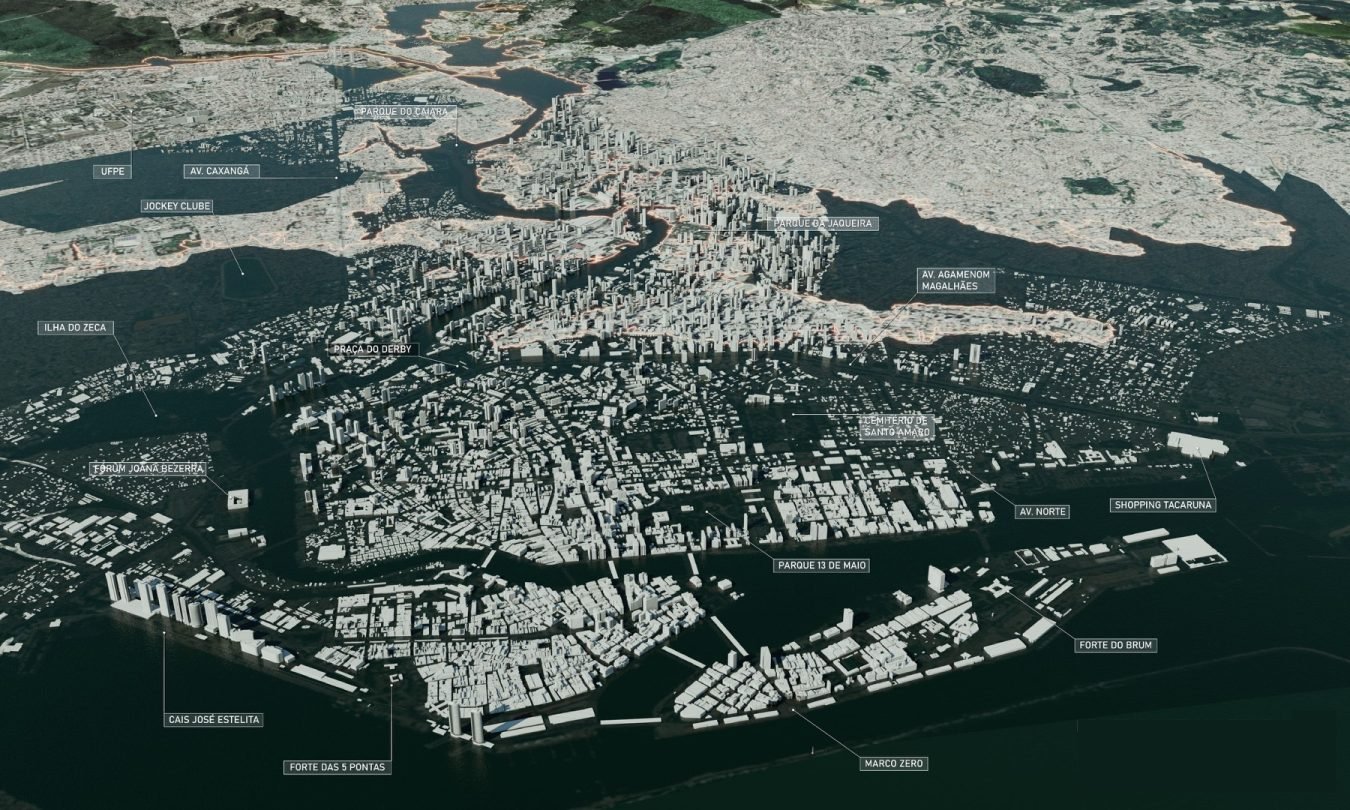
Unlike the Portuguese, who settled safe and sound on the hills inland, the Dutch established the city of Mauritsstad in the low laying river delta; conditions they were familiar with and that were profitable for the trade foreseen. Today however this location of the city -now known as Recife- is highly problematic, due to sea-level rise. Now, these water challenges bring the two countries together again.

To protect their properties from Portuguese counter attacks and possible other invaders the WIC constructed an extensive defense line of fortresses along the Atlantic shores of Pernambuco. Most of the remaining forts of the Dutch rule are standing idle today. What relevance can they bring to a current society?

This lecture evening will be conducted in English.
Lezing mei 26 2

Programme

18h30 Meal 
19h30 Introduction by Daan Lavies 
19h35 400 years of Dutch Brazil by Oscar Hefting and Q&A 
20h15 Pause 
20h30 Designing for Extremes by Mila Avellar Montezuma and Q&A
21h15 End

The lectures

Gezicht op Itamaracá

400 Years of Dutch Brazil - Oscar Hefting

In 2030 it will be remembered that 400 years ago a part of Brazil was under Dutch rule. The Dutch West India Company (WIC) attempted, between 1630 and 1654, to gain a share in the lucrative sugar trade. To this end, it captured Olinda, the Portuguese capital of northeastern Brazil, as well as a coastal stretch of approximately eight hundred kilometers.

In addition to Olinda, the Dutch built their own capital, Mauritsstad (today’s Recife), a city in the river delta that was familiar to them. Of the eighty fortifications that the WIC built or used, some are still visible today, and in some cases even still in use. Other forts from that period have been built over or remain hidden in the jungle.

Modern techniques offer new opportunities for archaeological research. In addition, access to archives has improved significantly in recent years, creating prospects for new insights.

In the years leading up to 2030, attention will be devoted to the position of Dutch Brazil in the Atlantic world through research, publications, education, and exhibitions. In this way, the connection between the two countries will be further strengthened.

Designing for Extremes: How a Dutch-Brazilian Cooperation reshaped a climate hotspot into a City-Park - Mila Avellar Montezuma

In the year 2037 Recife will commemorate the start -400 years ago- of its Dutch-designed Renaissance city plan. Yet, at the same time the amphibious city, being the world’s 16th climate hotspot, faces permanent submergence. This lecture explores 15 years of Recife Exchanges, a cultural South-North cooperation reframing water as heritage and as a strategic asset for adaptation. Co-evolving into a socio-political movement, blue-green infrastructure interacts with urban morphology to catalyze a cultural paradigm shift: designing a long-term vision for an amphibian deltaic metropolis. Highly participatory governance repositions our shared past into collaborative tackling future resilience challenges on both sides of the Atlantic, reimagining water-sensitive urbanism and spatial justice from municipal to national-scale.

About the speakers

Oscar Hefting

Foto van Oscar Hefting

Oscar Hefting studied archaeology at the University of Amsterdam, where he specialized in Dutch colonial fortifications. He was a member of the excavation team at Fort Orange in Brazil in 2002–2003, where a 17th-century Dutch fort (1631) was identified beneath an 18th-century Portuguese fort.

As Director of the New Holland Foundation, he coordinates the Atlases of Dutch Brazil, Dutch North America, and Dutch West Africa—comprehensive inventories of historical and archaeological material. In this role, Hefting aims to organize exhibitions and promote the conservation of Dutch heritage overseas.

Where fortifications once served to divide people, Hefting now promotes their use, and that of shared heritage, to bring cultures together.

Mila Avellar Montezuma

Foto van Mila Avellar Montezuma

Mila Avellar Montezuma is an Architect, Urbanist, and Landscape Designer with an MSc Water Science and Engineering, specialized in Sustainable Urban Water Management and Climate-Resilient Cities from UNESCO-IHE, TU Delft, and IHS Erasmus, and a post-graduation in Urban Heritage Strategies for Water Challenges (IHS, TU/Delft, RCE). 

As a practitioner and researcher across public, academic and private sectors, Mila is deeply committed to advancing extreme climate adaptation through a research-by-design approach, with a focus on nature-driven technological strategies. She has been developing water-adaptive projects mainly in Brazil, Netherlands, China and Bangladesh.

Practical information

Costs
Cost for ICOMOS members: lectures are free; meal €15.
Cost for non-ICOMOS members: lectures €5; lectures + meal €20.
 

Meal
Dinner will be served at 6:30 PM. Unless otherwise communicated, this will be an Indonesian rice table.
The cost is €15 per person. Coffee, tea, and water are included; other drinks are available for purchase.

Please note: registrations or cancellations for the meal must be made no later than 48 hours in advance.
 

Location
Amstelkerk (Amstelveld 10, Amsterdam)

Registration

Registration takes place via the website. Click here. 

We look forward to seeing you on Wednesday, 13 may at the Amstelkerk in Amsterdam. See you then!

Agenda

Onboardingsessie Nieuwe Leden (Zaandam)

Onboarding
15 mei 2026
Tijdens deze bijeenkomst maken nieuwe leden kennis met de vereniging, de internationale werking van ICOMOS en de mogelijkheden om actief bij te dragen. Deze bijeenkomst vindt plaats in Zaandam.

Positioning Heritage at the Heart of the Sustainability Agenda: New Regional Webinar Series

Webinar
20 mei 2026
The Sustainable Development Goals Working Group (SDGWG) is pleased to announce a new series of regional webinars: "Integrating Culture and Cultural Heritage into Sustainable Development."

Unesco (Vlaanderen) Trefdag - De rol van UNESCO in tijden van crisis

Extern evenement
22 mei 2026
UNESCO Vlaanderen organiseert een trefdag waarin wordt ingegaan op de vraag wat UNESCO vandaag betekent, en waarin tegelijk wordt getoond waarom UNESCO relevanter is dan ooit.
Block

News

ICOMOS Nederland zoekt een algemeen bestuurslid!

2 mei 2026
ICOMOS Nederland is op zoek naar een algemeen bestuurslid, te benoemen tijdens de eerstvolgende Algemene Ledenvergadering (12 juni 2026).

Terugblik op de lezing van 8 april

26 april 2026
Op 11 maart kwamen we met een grote groep samen voor de maandelijkse lezingenavond, met het thema “Structuralisme onder druk”. De sprekers waren Anneke de Gouw en Ana Pereira Roders.

Verslag van de vergadering van de Focusgroep Gedeeld Cultureel Erfgoed

14 april 2026
Voorafgaand aan de ICOMOS-lezing in april, kwam de focusgroep Gedeeld Cultureel Erfgoed bij elkaar bij Stadsherstel Amsterdam. Lees hier het verslag van de vergadering.
Block

ICOMOS Nederland
Zamenhofstraat 114
2518 LB, Den Haag
info@icomos.nl
IBAN: NL57ABNA 0516610864
KVK: 34119648

Word lid

voor leden

Block
© 2026
ICOMOS Nederland

Voet

  • Privacystatement