ICOMOS Lectures - Learning from Japan - 11 January 2023
Lezing
Dear heritage colleagues and friends,
We kindly invite you to our first ICOMOS Netherlands lecture evening in the new year. All three guest lecturers have experience in the cultural field in both Japan and the Netherlands. Focussing on museums, architecture and cultural policies. They will share with us how approaches differ in the field of museum and architecture and how the Netherlands Embassy in Tokyo could facilitate heritage cooperation between Japan and the Netherlands.
Unlike the online lectures, we have a limited capacity for attendance. We can only accommodate 30 people. For that reason we ask you to register for attendance. Please use the register form through this link. Here you can also register for the preceding drinks and meal.
Attendance is € 5,- (be it, only for non-members; for ICOMOS-members attendance is free of charge). If you join the preceding drinks and meal, you are charged € 15,-. All payments can only be done by bank transfer on the spot.
We very much hope to welcome you to this live event in Amsterdam, for an inspirational start of the new year!
19:30 International Cultural Policy and Shared Challenges – by Jinna Smit
19:45 Differences in trends in museum education in JP-NL – by Maiko Sato
20:05 Short Q&A
20:10 Break
20:20 Tokyo water city – by Yukiko Nezu
20:40 Q&A
21:00 End
ABOUT THE LECTURES
International Cultural Policy and Shared Challenges – Jinna Smit
The Netherlands Embassy in Tokyo has facilitated heritage cooperation between the Netherlands and Japan for many years, focusing on so-called shared heritage. The International Cultural Policy 2021-2024, however, required a shift in focus. Therefore, the embassy sought advice on how to implement this policy in an effective manner. In her presentation, Jinna Smit will explain her advice to the embassy.
Differences in trends in museum education in JP-NL – Maiko Sato
Maiko Sato is a Japanese museum educator. Thanks to the grant from the Japanese Government, she was able to do interviews with the museum educators of Dutch museums. In this lecture, she will mention differences she found in her research. Focussing on programming, working methods and orginality of museum exhibitions.
Maiko will introduce the differences in trends between the two countries by presenting programs she conducted in a Japanese museum.
Tokyo water city – Yukiko Nezu
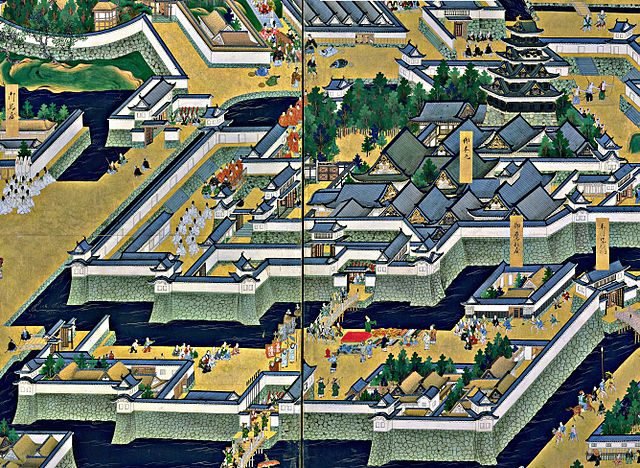
Tokyo was once a water city in the Edo period, before it was modernised. Pioneered and built up by the Tokugawa Shogun, Edo took advantage of the flat soil of the Kanto Plain (in present, Tokyo Metropolitan area) to create a ring of canals around the castle to support fishing and transport in Tokyo Bay. The city of one million people in Edo was already achieved in 1721. The infrastructure using water transport was sustainable and adapted to people's living areas.
Tokyo still has many canals and rivers, each with its own infrastructure of sluices and bridges. However, with the modernisation of the city and the spread of private cars in public areas, highway roads were built over the canals. Most of Tokyo's waterfronts are visible in the everyday landscape but lack the beautiful landscape design as well as keeping distance from daily activities. How can we try to develop further human scale? How can we be aware that Tokyo canals are so special?
ABOUT THE SPEAKERS
Maiko Sato is a Japanese freelance museum educator with over eight years of experience based in Amsterdam. Before coming to the NL, she worked at Contemporary Art Center, Art Tower Mito, in Japan. Her main role was conducting art programs to connect the art center and local communities, such as the Blind, the Deaf, autistic kids, schools, and elderly people. She received grants from Agency for Cultural Affairs in 2021 and Nomura foundation in 2023 to research museum education and art programs for diversity and social inclusion.
Her current research is supported by the Nomura Foundation
Yukiko Nezu is based in Amsterdam and runs an architecture studio called Urbanberry Design. She received the Master of Engineering at Tokyo City University in 1996. With the support of NIFFIC she studied at Berlage Institute in Amsterdam from 1997 to 2000. After receiving the Master of Engineering, she started her studio and registered as an architect in the Netherlands in 2005. She is involved as a designer in architecture, interiors, urban planning, and products, and specialises in creating concepts for start-ups. Recently she worked as a local architect for the Floriade Japanese pavilion which won the grand AIPH Prize and another Gold for the Floriade Expo 2022 theme Indoor Garden. (www.urbanberry.com)
Jinna Smit was trained as a historian and archivist. Since 2010, she has furthered international heritage cooperation, while working at the National Archives of the Netherlands, DutchCulture, the Netherlands Embassy in Sri Lanka, the Cultural Heritage Agency and the Netherlands Embassy in Japan. Currently, she is the Acting Head of Department for the Region North East at the Cultural Heritage Agency of the Netherlands.