
ICOMOS Lectures Wednesday 14 April 2021
History is hot. Every day we learn more about different histories, whether personal stories, fresh perspectives or shocking revelations. No longer is our history merely taught in schools or through books: history is in the making in the here and now, through privately initiated heritage walks, in neighbourhood archives or fueled by addressing larger social issues.
Our speakers will share with us how contested histories in their country or city are addressed, using specific case studies. They will take us to South Africa, United Arab Emirates and the Netherlands.
19:30 Welcome and introduction: Remco Vermeulen and Thijs van Roon
19:35 Annissa Gultom: “We Are Not Pirates” (United Arab Emirates)
19:50 Kathleen Ferrier and Koosje Spitz: Towards an Inclusive Society (Netherlands)
20:05 Zahira Asmal: History, Memory and Making Place (South Africa)
20:20 Short break
20:35 Panel discussion among the speakers, moderated by Remco Vermeulen
20:50 Q&A with audience
21:15 End
“We Are Not Pirates” by Annissa Gultom
The imperial British power scorched the pages of world history with complete ignorance of the existing indigenous community and “… stole countries with the cunning use of flags. Just sail around the world and stick a flag in” (Izzard, 1998). When the bit did not cut it, false accusations used to justify violent takeover. In the 19th century Arabian Gulf, they accused the Qasimi tribe as pirates, a threat for international trade. These ‘Ichthyophagous’ (Greek for ‘fish eaters’, ancient name for these coastal people) denied actively through letters. Eventually, violent events crushed the tribe’s power and left a mark of “Pirate Coast” on their land. In the 20th century, Qasimi intellectuals and UAE leaders clarified this false history through scientific publications and efforts of strengthening their cultural identity. This approach is not as straightforward as tangible restitution, yet this is an admirable approach of cleaning up the centuries old stain from the face of their ancestors.
Towards an Inclusive Society by Kathleen Ferrier and Koosje Spitz
Unesco seeks to build peace through international cooperation in Education, the Sciences and Culture. For decades Unesco, as well as the Netherlands Commission, has been vocal about the fight against racial discrimination. It is in solidarity with the peaceful ‘Black Lives Matter’ protests. On the other hand the Netherlands Commission has also condemned taking down and damaging statues of contested historic figures. In the ICOMOS presentation Kathleen Ferrier and Koosje Spitz look back at the protests. They will discuss the growing (global) need to reflect upon on our colonial past, while also elaborating on the organization’s vision and position that an inclusive society can only be achieved by entering into dialogue.
History, Memory and Making Place by Zahira Asmal
Zahira pulls together the threads of South Africa’s spatial history: colonialism, apartheid, forced removals, migrant labour, the new Afripolitan city. She critiques a development ideology that celebrates modernity, rather than successfully integrating the past into the present. She imagines a pan-African vision, where government, citizens, the diaspora all contribute equally to the making of the city. Zahira investigates South Africa’s contested history. How has this influenced the making of memories and identities? How do culture and design professionals navigate the new democratic city? Who has agency to make place in the country’s big cities?
RSVP to lezingen@icomos.nl to register for this 'event'
Annissa Gultom, Kathleen Ferrier, Koosje Spitz, Zahira Asmal
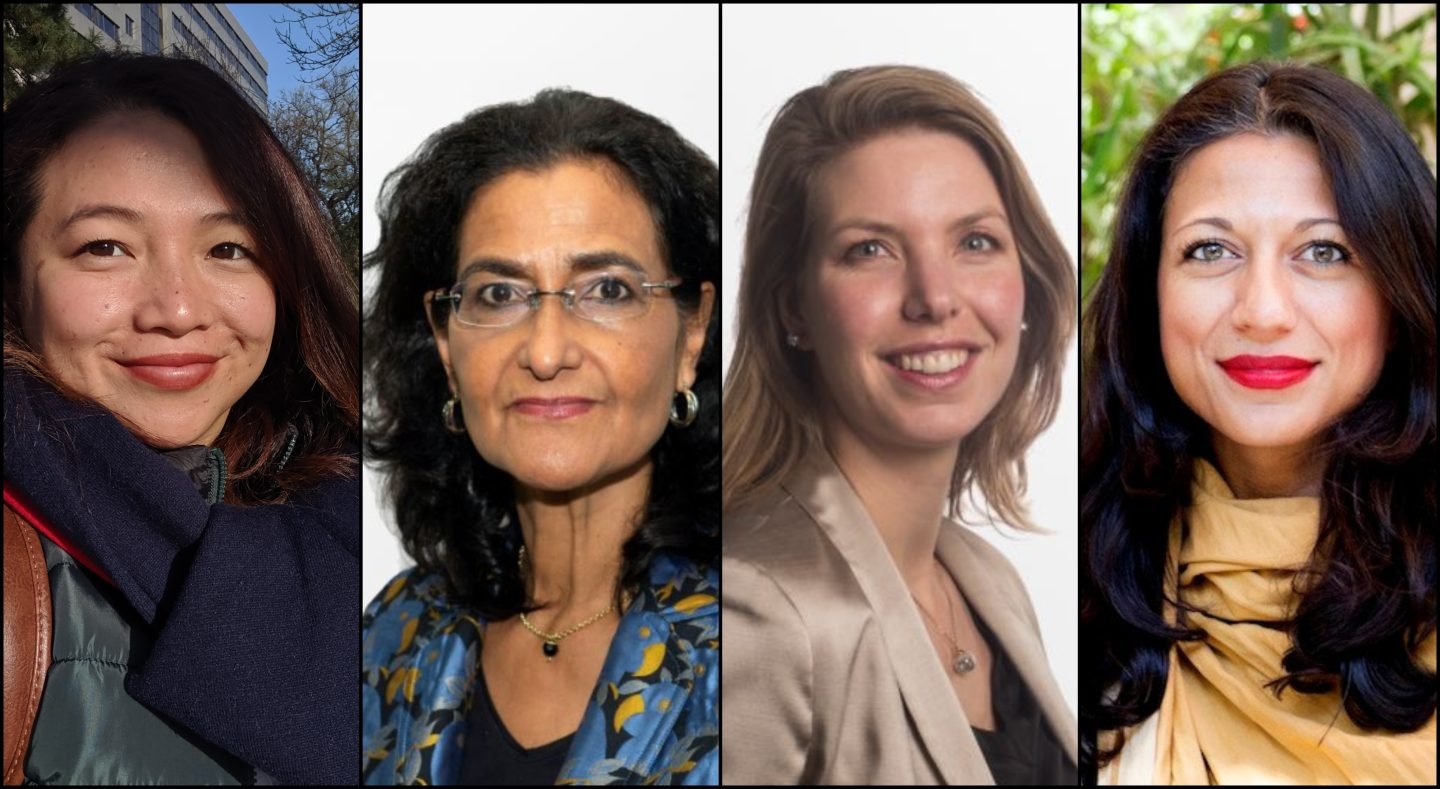
About the speakers:
Annissa M Gultom built her career from the field of academics right after she completed her degree in Archaeology in Universitas Indonesia in 2005. Yet her further practice in Humanities later on focused on Museology as she explored the aspect of exhibition development, curatorial process, audience studies, and institutional development. This expansion led her to gain a degree in Museum Communication in the US, in 2010, a program that focused on how to connect different aspects of Museology. Her career highlights in Indonesia are the establishment of (now defunct) Museum Kain, Bali (2012-2016); Jakarta Biennale 2018 and the new permanent exhibit of Jakarta History Museum (both were done in parallel in 2017). Since 2018 she relocated to UAE and was involved in recent new museums projects in the region before becoming Manager of Museum Department, Department of Antiquities and Museums, Ras Al Khaimah.
Kathleen Ferrier and Koosje Spitz work at the Netherlands Commission for Unesco, respectively as president and as advisor. The Commission is an independent civil society organisation which supports Unesco's work in the building of peace, the eradication of poverty, sustainable development and intercultural dialogue through education, the sciences, culture, and communication. The Commission functions as an intermediary between the Dutch government, professional organisations, scientific experts, civil society, the media and the general public. The Commission has published various reports and statements related to contested heritage and organized multiple meetings and a podcast episode ‘De meerstemmige samenleving’ on the topic.
Zahira Asmal is an urbanist and director of The City, a research, publishing and place-making agency she founded in 2010. In her projects, Zahira seeks to enhance the making of public places and spaces in South African cities through engagement and collaboration with governments, cultural institutions, designers, artists, academia, and the public. Her books Reflections & Opportunities published in English and Brazilian Portuguese was presented in 17 cities worldwide, and Movement, three editions - examine sociopolitical, economic, and cultural environments shaping South Africa’s big cities. Zahira worked with Sir David Adjaye on his book and exhibition on African metropolitan architecture and more recently, on a placemaking project in Johannesburg’s Park Station. Her current project, See, explores contested urban histories, equal representation in the memorialisation of history and the construction of resilient postcolonial urban identities; Zahira served as advisor to the Africa Architecture Awards in 2017, African Crossroads in 2018 and is currently serving on the Board of Advisors for the International Archive of Women in Architecture.
Attend?
RSVP for attendance via our monthly mailing or by mailing to lezingen@icomos.nl