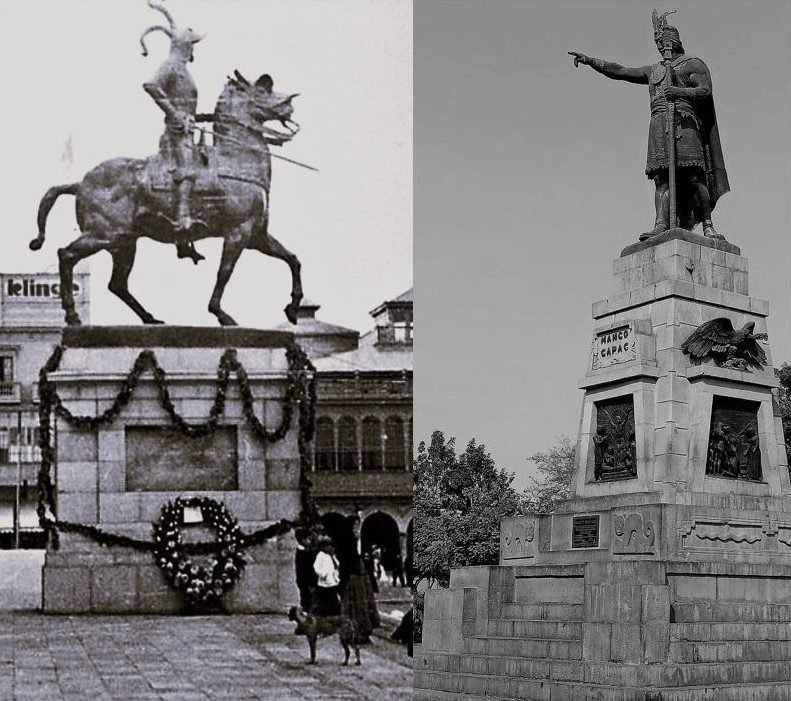
Contested Heritage and the Politics of Memory. Two Cases: Lima and Madrid
Public space is one of the most visible arenas where nations negotiate uncomfortable legacies. As societies, especially in Europe and the Americas, become increasingly polarised, debates around monuments, street names and historical symbols are no longer peripheral cultural questions. They have become key sites where competing visions of identity, citizenship and history are asserted or resisted.
This session brings two perspectives on how cities address contested heritage. Javier Lizarzaburu will discuss Lima, a postcolonial capital where conservative administrations have repositioned the city’s heritage narrative by focusing on colonial symbols. The return of the statue of conquistador Francisco Pizarro illustrates this shift, revealing how dominant historical framings persist, while Indigenous, pre-colonial narratives are sidelined.
Paula O’Donohoe will focus on Madrid, where heritage linked to the Franco dictatorship is being reassessed through new national frameworks such as the 2022 Law of Democratic Memory. The process has generated tensions between national and regional approaches to heritage governance, highlighting how different levels of administration interpret their responsibilities in managing difficult or sensitive heritage.
Taken together, these two cases show how the politics of memory intersect with heritage practice at a moment when consensus around the past is becoming increasingly fragile. They also prompt reflection on the role of heritage professionals in safeguarding the integrity and inclusivity of heritage narratives in the urban and commemorative landscape.